
Leviticus Chapter 1
The Burnt offering

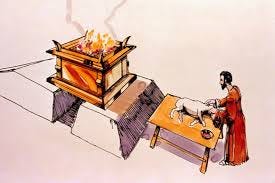
So in the first few chapters of Leviticus, it dives into 5 different types of sacrifices: the burnt offering, the grain offering, the peace offering, the sin offering and the guilt offering.
Levitucs 1 starts with the gravest offering, the heaviest one- THE BURNT OFFERING!
Now, before we venture further, I would like to point out that God began giving laws to Moses in Exodus Chapter 20, where He gave the Ten Commandments. God went on to give the Israelites additional laws regarding idols, altars, the treatment of servants, the protection of property, and laws of justice and mercy, among others.
Instructions for building the altar for the burnt offering are mentioned in Exodus 38:1-7; we will revisit this altar later to examine its significance.
The laws cited in Leviticus were written for the Israelites, guiding moral living and worship. It was also written to guide the priests in their duties and responsibilities. I want you to keep that in mind, as God has also called believers a Royal Priesthood.
Now, Leviticus 1 is not the first place that the burnt offering is mentioned. Noah first gave a burnt offering after he came out of the ark. It is interesting to note that God instructed Noah to take both ‘clean’ and ‘unclean’ animals into the ark—a topic that Leviticus later addresses. God is INTENTIONAL, He never does anything out of the blue - there is always a reason, even when we don’t fully grasp what that reason is. So we see that the ‘burnt offering’ was already a thing, even before the Priesthood was instituted. This means it would not have been foreign to the Israelites and they would have had knowledge of its significance.
Then Noah built an altar to the LORD and, taking some of all the clean animals and clean birds, he sacrificed burnt offerings on it. Gen 8:20
Abraham was also going to offer Isaac as a BURNT OFFERING before God provided the ram in Genesis 22:2:
Take now your son, your only son whom you love, Isaac, and go to the land of Moriah, and offer him there as a burnt offering.
Another thought that comes to mind is the concept of animal sacrifices in general. Was it only peculiar to the Israelites and did it have the same context if practised elsewhere? Animal sacrifice was a common practice in the ancient Near East. Those who practised it had to offer animal sacrifices to appease their gods and keep them happy so that they wouldn’t incur their wrath. Some cultures even went as far as sacrificing their children to gods like Molech ( passing children through the fire, something which was an abomination to God - 2 Kings 17:17, Ezekiel 16:21). God even warned the Israelites not to do this later in Leviticus 18.
For the Israelites, however, offering animal sacrifices was not within this context. It’s not because God is just angry, and so they had to keep offering these sacrifices to appease Him. At the end of Exodus, the tabernacle had been set up, God was ready to dwell with his people, but as previously explained, SIN was a barrier. Sin defiles, creating an unholy environment. And remember, God is HOLY. Everything He comes in contact with needs to be holy, including the environment. Through the animal sacrifices, God was instituting a system through which the Israelites could be cleansed and purified so He could come near and dwell with them and fellowship with them. This system that God set up was an expression of His love, NOT anger, so that Israel could draw near. GOD IS LOVE. Everything He does is out of LOVE.
Draw nigh to God, and he will draw nigh to you. Cleanse your hands, ye sinners; and purify your hearts, ye double-minded. James 4:8
And so, with us, God makes His dwelling. We are the temple of the Living God (1 Corinthians 3:16) ; we are therefore supposed to be a living sacrifice, holy and acceptable to Him (Romans 12:1), just like the burnt offering. Don’t you love how everything in the Bible is connected?
What is the significance, therefore, of the BURNT OFFERING?
First, it was an offering that could be offered at any time, and it would be burnt on the altar completely (excluding the skin). The animal or bird was to be without defect (denoting value); anyone could bring this offering, rich or poor. It was to be presented at the entrance of the tent of meeting, willingly by the individual. The person bringing the offering was to lay their hand on the head of the burnt offering, and it was accepted to make atonement for them. It was an aroma pleasing to the Lord (Leviticus 1:3-9). The Hebrew word for ‘burnt offering’ is to ascend/go up in smoke. The blood of the animal was splashed against the sides of the altar.
The killing of the animal and draining of its blood (it’s life) was a depiction of the devastating nature of sin. Sin causes death, decay and corruption to the individual and to the community as a whole. Sin compounds and brings a downward spiral - look at our world today. So the animal’s death and life-force draining were a powerful reminder of sin’s impact and a deterrent.
Now, since the wages of sin is death (Rom 6:23), technically, the Israelites had to die for their sin (because God is just, sin must be addressed either through punishment or atonement) - but because of God’s love and mercy, He accepts the death of the animal in place of the Israelite. So the animal sacrifice becomes a ransom payment to cover them. The Hebrew word kipper/kopher in Leviticus 1, meaning ‘to cover’, is translated into English as ‘atonement’.
For it is not possible that the blood of bulls and goats could take away sins. Hebrews 10:4
The Israelites laid their hands on the animal to denote that the animal was atoning for their sin (the animal was standing in their place to take the punishment they deserved). The burnt offering was a gift presented to God, a gift from their heart, symbolising their desire to draw near to God, just as we draw near to God in prayer. The worshipper had a responsibility, and the priest also had a responsibility in offering this sacrifice. The burnt offering was kept burning til it turned into ash. This imagery makes me think of sin and how we must deal with it severely and continuously so its deceitfulness does not harden our hearts (Hebrews 3:13). Imagine the population of the Israelites and the number of burnt offerings being offered every day, imagine how much work it was for the priests…
These animal sacrifices pointed to the ultimate sacrifice that our Lord Jesus Christ would make for the sins of humanity. How powerful a thought, that the Israelites were enacting a future event without fully understanding it. They obeyed God and understood the gravity of offering the burnt offering as a reminder of God’s love and mercy towards them - an unholy people, who are being made holy through their association with a holy God.
Resources/References
https://bibleproject.com/articles/animal-sacrifice-really/
https://www.gotquestions.org/burnt-offering.html